Event gastronomy is not restaurant cooking at scale. It is a discipline in its own right, one that combines the demands of high-precision cookery with the constraints of a mobile service, under pressure, for hundreds of guests at once. What takes place behind the scenes of a great reception bears no resemblance to what the guest perceives from their chair, and that is precisely the objective.
Rahal Maître Traiteur has practised this craft since the old Medina of Casablanca, where Haj Rahal Essoulami laid the foundations of a standard passed on from generation to generation. This article describes what that standard means in the day-to-day practice of a reception kitchen.
What distinguishes a reception kitchen from a restaurant kitchen?
The absence of fixed infrastructure
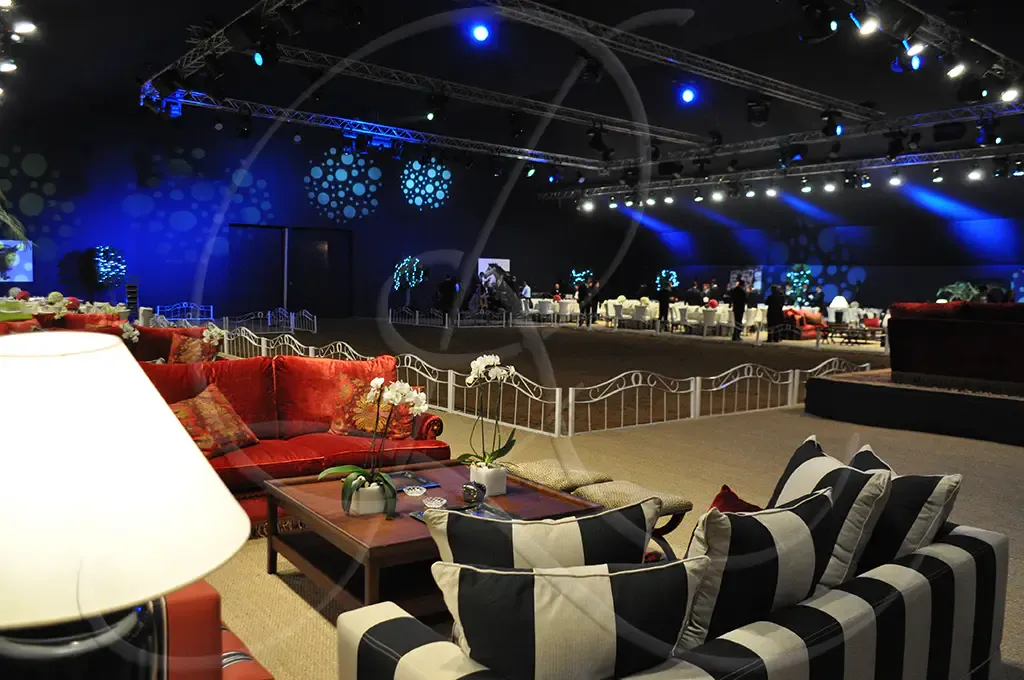
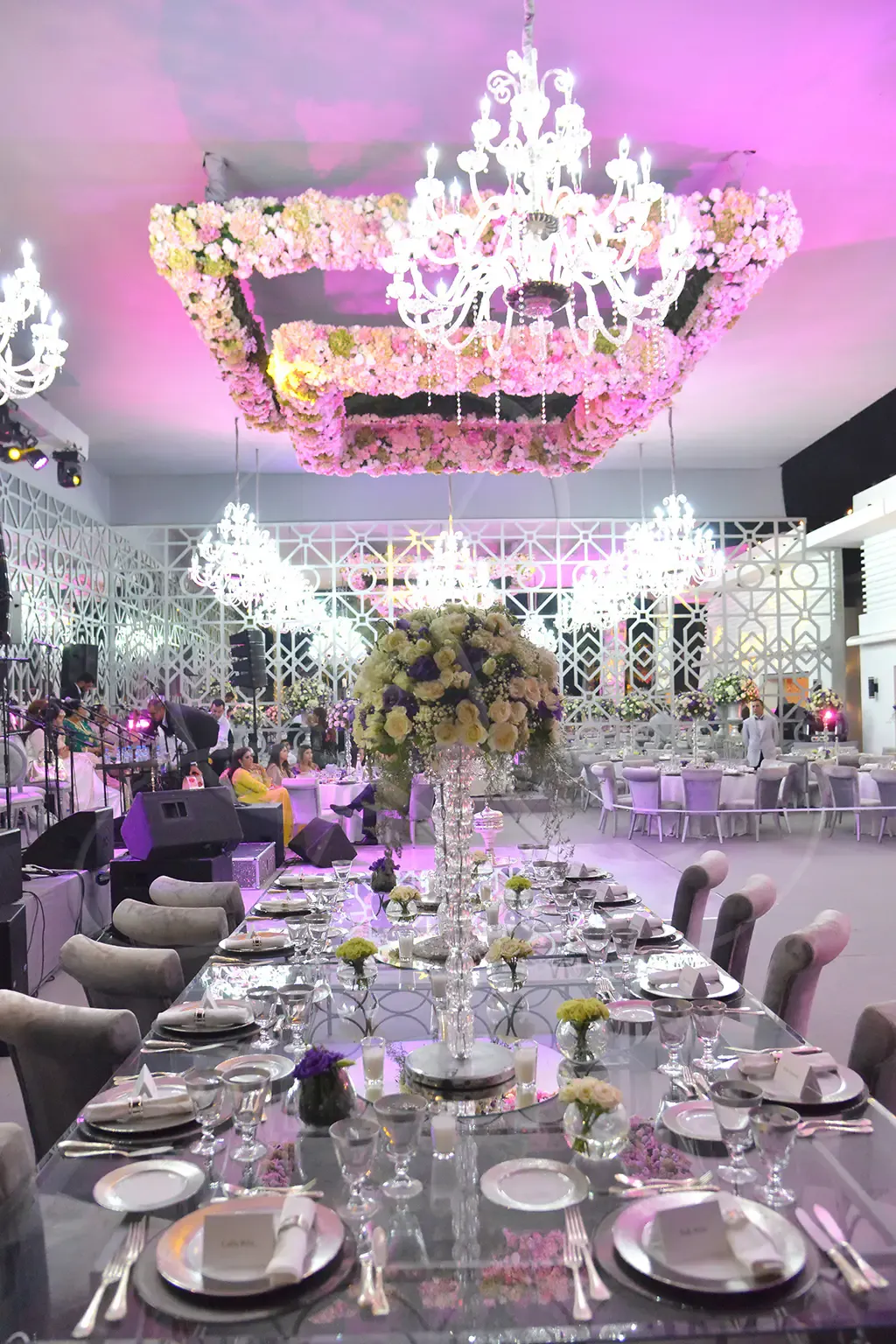
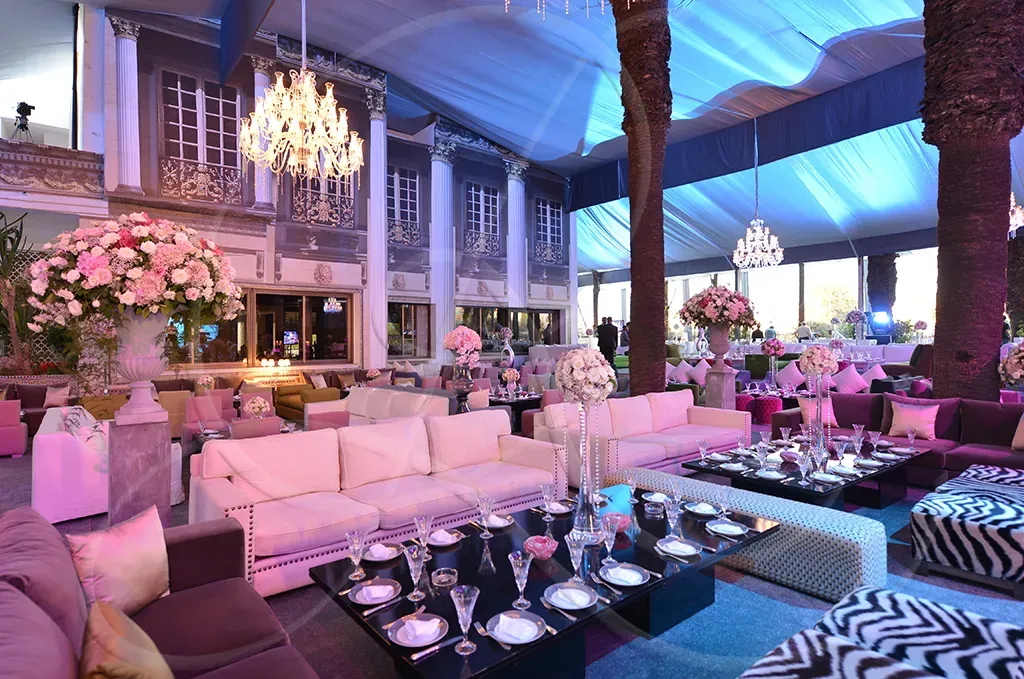
A restaurant works from a permanent kitchen, calibrated for its volume, equipped with its own facilities, in a familiar and controlled space. An event caterer, by contrast, reconstitutes a complete kitchen in a different location each time: ceremony halls, gala marquees, congress centres, private estates. The team arrives with its own equipment, worktops, hot and cold circuits, and a brigade trained to work within this structural uncertainty.
That itinerant discipline imposes demands that a fixed kitchen never encounters. Each deployment must be assembled, verified and tested before service begins. There is no margin to discover a problem once the event is under way.
Volume at scale, without compromise on quality
A high-calibre reception kitchen frequently produces several hundred plates simultaneously, sometimes considerably more on major mandates. The challenge is not only one of quantity: it is one of quality. Plate number 450 must receive exactly the same care in its dressing, the same heat and the same presentation as the first. That consistency at scale is not an organisational detail: it is the primary criterion by which one house distinguishes itself from another.
Absolute mastery of timing
At a reception, timing is not a service preference: it is a constraint imposed by the event’s programme. The speech, the moment of service, the succession of courses, all are inscribed in a schedule that does not wait. The kitchen must be ready at the precise moment, not five minutes before nor five minutes after. This synchronisation between the brigade and the unfolding of the event is one of the most difficult competencies to acquire, and one of the least visible to those who benefit from it.
What standards apply to product freshness in event catering?
Same-day sourcing
For a prestige gastronomic reception, raw materials are not held in stock beyond strict necessity. Fresh produce, fish, meat, seasonal vegetables, aromatic herbs, arrives on a short cycle, validated by the head of the kitchen team that same morning or at the latest the day before. This tight sourcing discipline requires rigorous logistical organisation, trusted suppliers and a clear hierarchy of purchasing priorities built around the agreed menu.
Traceability as a professional standard
Knowing the provenance of every product, the conditions in which it was kept and who handled it is not merely a regulatory obligation. It is a professional posture that protects the House’s reputation as much as the wellbeing of guests. A food safety incident at a major reception cannot be repaired. Documented traceability is the only serious safeguard.
How does plating contribute to the gastronomic experience?
The plate as a first message
Before the first taste, the guest receives a visual message. The composition of the plate, the precision of the dressing, the coherence between the presentation and the identity of the commissioning host, all of this constructs an expectation. A plate that is careless in presentation undermines confidence in what follows, even where the cooking itself is irreproachable. The reverse is not true: a beautifully dressed plate whose cuisine disappoints creates a compounded disappointment.
High-calibre event plating integrates both dimensions inseparably. It is not ornamentation added after the fact, but a considered approach to the plate in its entirety: texture, colour, balance, portion.
The culinary identity of a house
The gastronomic style of a catering house is recognisable at table. The way sauces are placed, garnishes are structured, service pieces are chosen: these constitute a signature. That signature is built over years of practice and transmitted within brigades. It cannot be purchased by subcontracting the plating to teams assembled hastily from outside.
What criteria matter when choosing a caterer for a high-calibre event?
Three criteria merit careful examination: the coherence between the house’s stated references and the nature of the event envisaged; its genuine logistical capacity to deliver the quality it promises within the venue and conditions of the project; and its command of the dietary requirements of the intended audience.
A house’s reputation is verified in the loyalty of those who commission it, not in its brochures. Institutions, families and companies that return to the same provider from one reception to the next are expressing, through that loyalty, something that no press release could formulate.
Rahal Maître Traiteur operates from Casablanca to Rabat, Marrakech, Tangier, Agadir and the southern provinces, as well as abroad for mandates that require it.
To learn more about our gastronomic services, visit Our Services or contact the House to discuss your project.
Frequently asked questions
What distinguishes an event caterer from a conventional catering service? An event caterer reconstitutes a complete kitchen in each venue, produces large volumes simultaneously and synchronises its service with the event’s programme. These three constraints have no equivalent in fixed-location catering.
How is product freshness guaranteed for a large reception? Through short-cycle sourcing, suppliers selected for their reliability, documented traceability of each product, and an unbroken cold chain from receipt of ingredients through to service.
Is the plating adapted to the nature of each event? Yes. The visual register of the table is defined during the design of the service, in keeping with the event’s theme, the identity of the host and the type of service chosen. There is no single presentation applied uniformly across all mandates.
Does Rahal Maître Traiteur cater for large private receptions? Yes. The House operates for institutional events and for high-calibre private receptions alike: weddings, family celebrations and corporate hospitality, provided the level of expectation corresponds to its register of practice.