When a state or an international organisation brings together dozens of delegations for a summit, almost everything is planned months in advance: the rooms, the accreditations, the escort protocols, the meeting schedules. One question, however, remains less visible and equally decisive: who feeds this world, without a single failure, from the first working breakfast to the final official dinner?
Operating the catering at a diplomatic event bears no resemblance to a banquet, however grand. It is a discipline unto itself, subject to requirements that few operators meet. Here, point by point, is what a mandate of this nature genuinely entails, and what it means, concretely, to be a catering house capable of shouldering it.
What does it mean for a caterer to be “accredited” at an international summit?
Accreditation, in this context, is not a decorative label. It denotes the authorisation to operate within a secured perimeter, under the control regime specific to events held under the auspices of the United Nations or equivalent institutions. This presupposes vetted teams, documented traceability processes, and compliance with international sanitary standards verifiable at any moment.
Rahal Maître Traiteur has tested this requirement in the field: COP22 in Marrakech (2016), COP27 in Sharm el-Sheikh (2022), the Annual Meetings of the World Bank and IMF in Marrakech (2023), and the 15th Summit of the Organisation of Islamic Cooperation in Banjul (2024). On each occasion, coordination amounts to a near-military logistics operation: clear chain of command, redundancy of means, anticipation of contingencies, zero margin for error.
Which Moroccan caterer has operated at the great summits?
Rahal Maître Traiteur has accompanied a series of first-rank international gatherings, attested by several independent editorial sources:
- COP22, Marrakech (2016), designated caterer for the climate conference, serving delegations from one hundred and ninety-six countries. Source: Tourisme & Gastronomie, 2016.
- COP27, Sharm el-Sheikh (2022), engagement documented by three separate editorial teams. Sources: L’ODJ Media, LE360, VH Magazine, 2022.
- Annual Meetings of the World Bank and IMF, Marrakech (2023), large-scale culinary deployment. Source: LE360, 14 October 2023.
- 15th Summit of the Organisation of Islamic Cooperation, Banjul (2024), an operation conducted beyond Moroccan borders. Sources: Teranga News, Lejecos, 2024.
This continuity has a value in itself. A provider is not renewed across four consecutive summits unless the engagement has, each time, met the standards expected by the institutions that answer for them.
The real demands of a diplomatic mandate
Logistics first
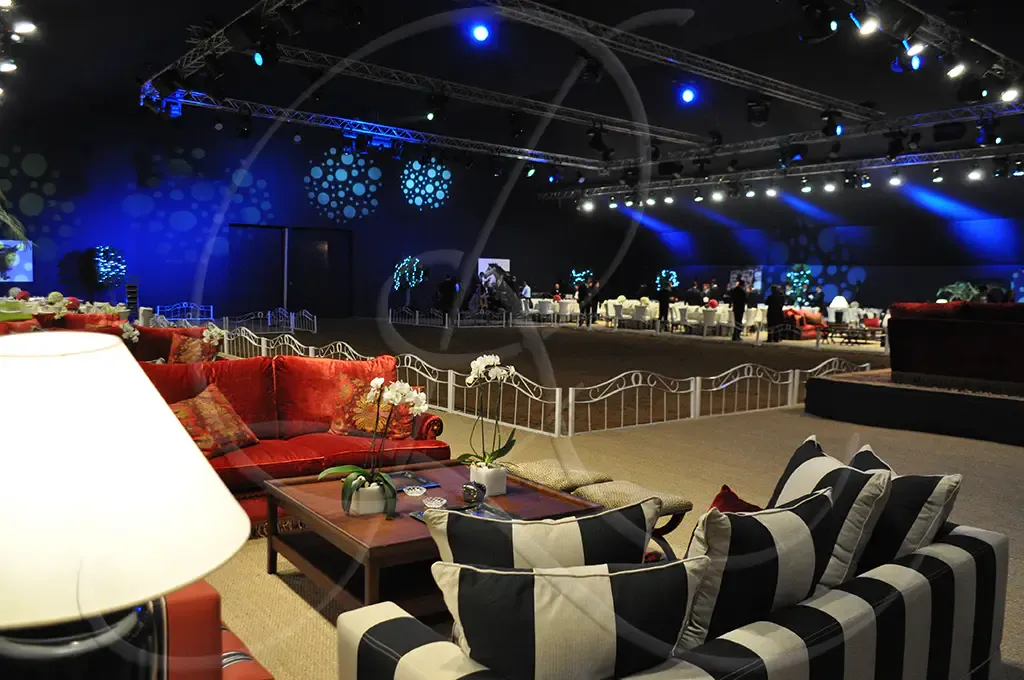
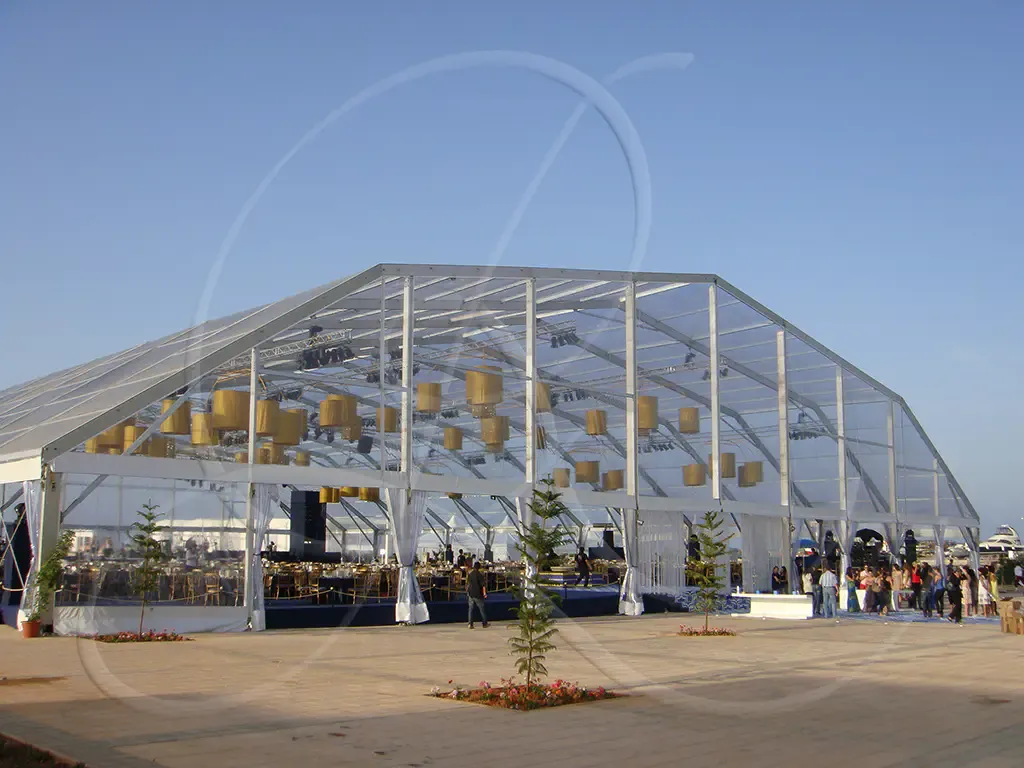
A summit never pauses for lunch. Working breakfasts, lunches between delegations, official dinners, coffee breaks on a sustained cadence, closing buffets: everything follows in rapid succession within constrained time windows, sometimes across multiple simultaneous sites. Regarding the 2023 World Bank-IMF Meetings, the House described the scale of the deployment to the press:
“12,000 people per day, 1,000 staff on site, a 2,000-seat food court over 1,200 m², 2,000 m² of kitchens, 100 events.” La Maison Rahal Maître Traiteur, in LE360, 2023.
Orders of magnitude of this kind are not managed by improvisation. They require dimensioned kitchens, secured supply chains, and planning calibrated to the quarter-hour.
Certifications and sanitary control
Serving international delegations demands total traceability: product origin, documented cold chain, hygiene procedures compliant with globally recognised standards. This is precisely what the reference to UN certifications encompasses. Without this foundation, no accreditation is possible.
Security and coordination
Inside a diplomatic perimeter, the caterer operates under permanent control: filtered access, vetted personnel, close coordination with security services. Catering becomes a link in the security of the event, not a peripheral service.
Volume without loss of quality
This is perhaps the most demanding test: absorbing thousands of covers per service without quality declining from one buffet to the next. This is where a provider of international standing distinguishes itself from a conventional event caterer.
The table as diplomatic language
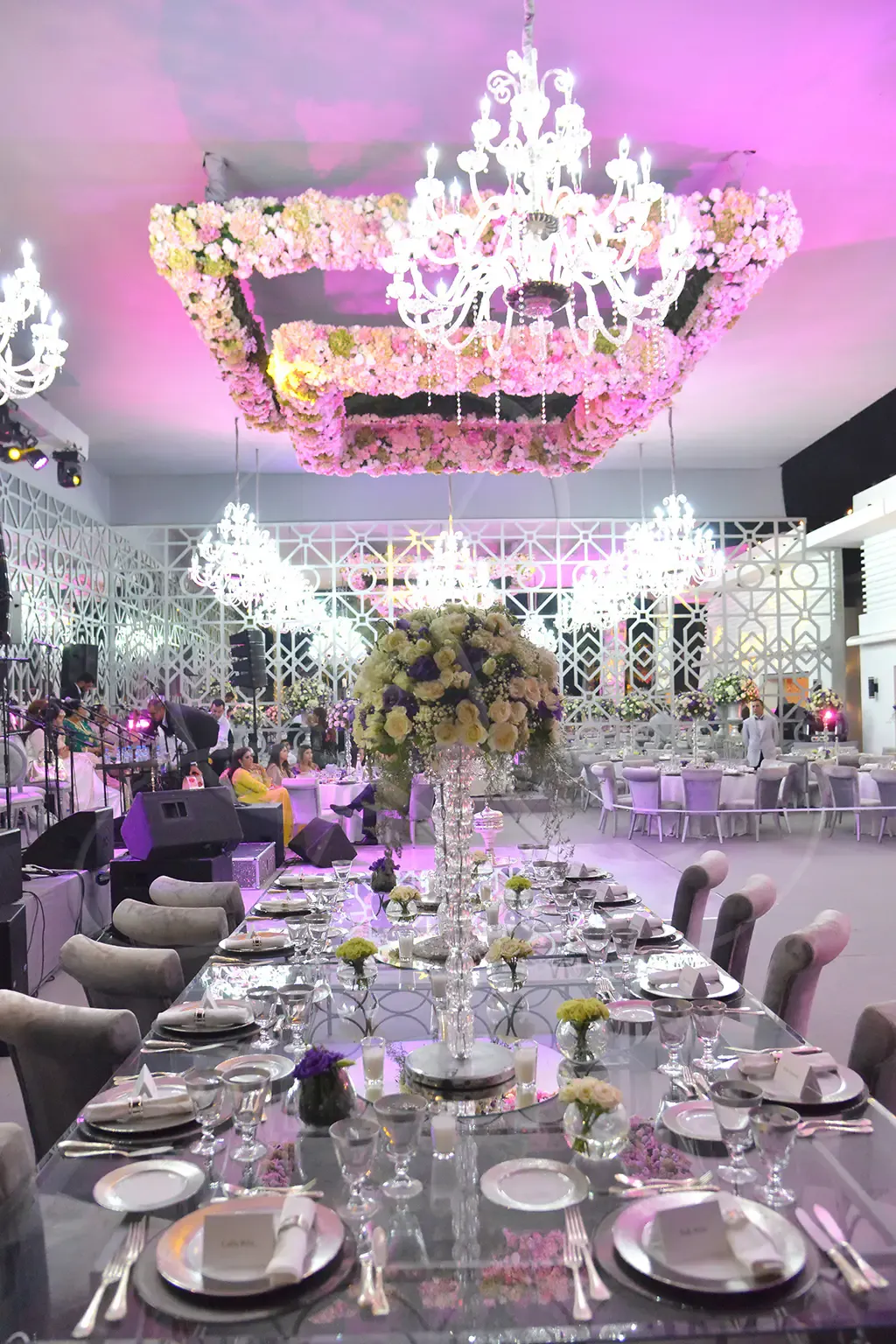
In the corridors of a summit, the table is often the only space where delegates set aside their files and speak freely. What is served there is never incidental. At these gatherings, the House chose to present the great cuisine of Morocco in its full nobility of reception, carried by its terroirs: argan from the Souss, saffron from Taliouine, dates from the Tafilalet. For many delegates, it was a first encounter; for the House, a demonstration that Moroccan gastronomy holds its own in any international context.
Frequently asked questions
What does “UN-accredited” mean for a caterer?
It denotes the capacity to operate, under control, within the secured perimeter of an event held under UN auspices, while holding the required sanitary and logistical certifications and employing vetted personnel. Rahal Maître Traiteur declared to the press that it holds “the UN certifications required for major global events” (L’ODJ Media, 2022).
Which Moroccan caterer operated at the COP?
Rahal Maître Traiteur operated COP22 in Marrakech (2016) and then COP27 in Sharm el-Sheikh (2022), engagements documented by Moroccan and international press (Tourisme & Gastronomie 2016; L’ODJ Media, LE360, VH Magazine 2022).
How does a diplomatic mandate differ from a large conventional event?
By the simultaneous combination of four constraints: international certifications, perimeter security, very high volumes over an extended period, and a constant standard of quality. Few operators combine all four.
Does Rahal Maître Traiteur operate outside Morocco?
Yes. Beyond summits held in Morocco, the House has operated abroad, notably at COP27 in Egypt (2022) and the OIC Summit in Banjul, The Gambia (2024).
Operating an international summit means combining an irreproachable standard of table and first-order logistical rigour. This is the expertise that Rahal Maître Traiteur also brings to companies and institutions for their diplomatic and protocol events. To appreciate the full breadth of this track record, discover all our references.