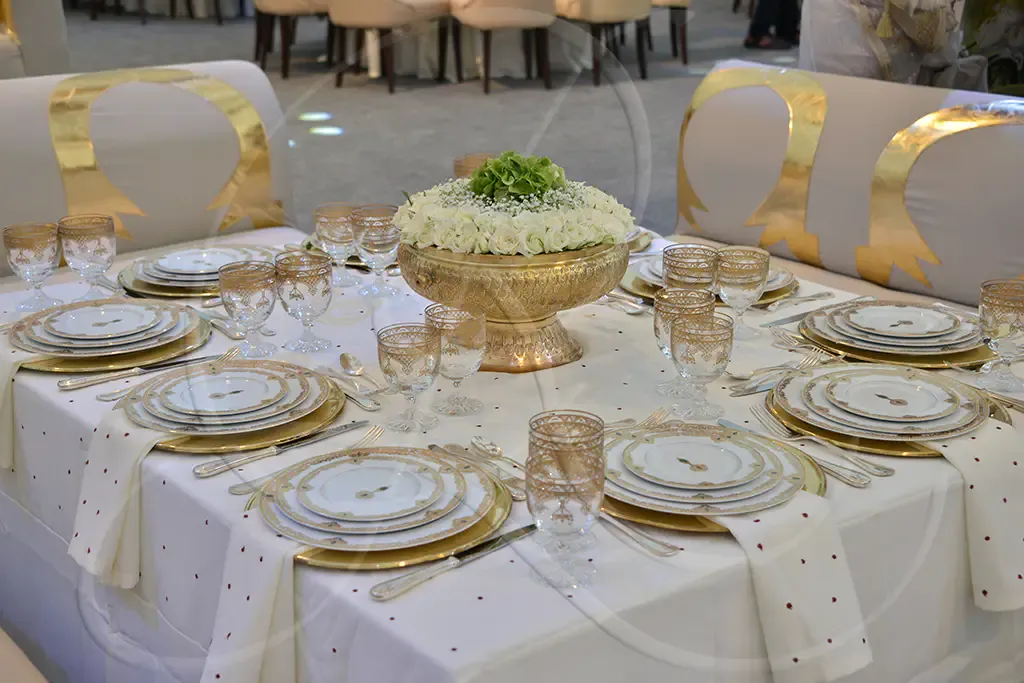
There is a moment, before the guests enter the room, when the table speaks for itself. The tablecloth drawn taut without a crease, the glasses aligned in precise symmetry, the tableware placed at the correct distance from the edge: this ensemble, which the guest may perceive only in an indirect way, shapes their experience well before the first course arrives. The art of the table is not an ornament added to the gastronomy; it is the opening sentence of a story the meal then continues.
Rahal Maître Traiteur brings to this dimension of its service the same care it gives to the kitchen itself. This article describes what the art of the table means in the context of a prestige reception, and why it is one of the most reliable indicators of a catering house’s quality.
What is the art of the table at a prestige reception?
An inherited and codified discipline
The art of the table follows precise codes that vary according to context: ceremonial reception, diplomatic banquet, wedding dinner, corporate luncheon. These codes govern the arrangement of cutlery, the number of glasses, the placement of service pieces, the presence or absence of a bread cover, the way the napkin is folded and presented. They are not arbitrary: they organise the meal so that the guest finds, at the right moment, exactly what they need, without effort or uncertainty.
Disregarding these codes in a formal reception is not a creative liberty; it is a professional failing. Guests invited to an official table expect to find them in place. Their absence creates a diffuse discomfort that diminishes the overall experience of the reception.
Coherence between the cover, the room and the menu
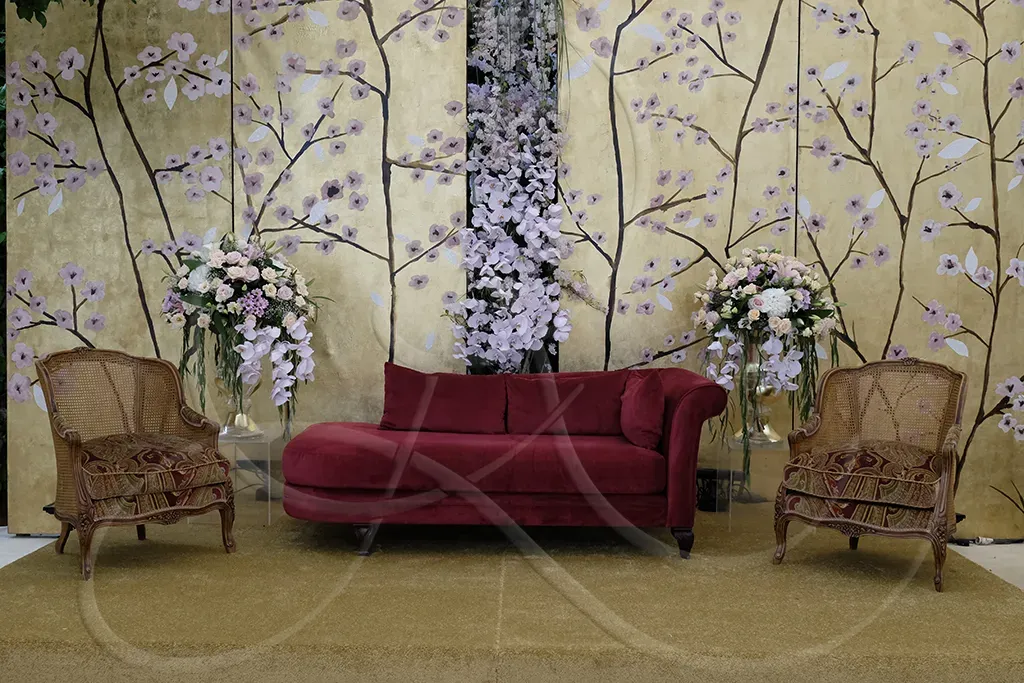
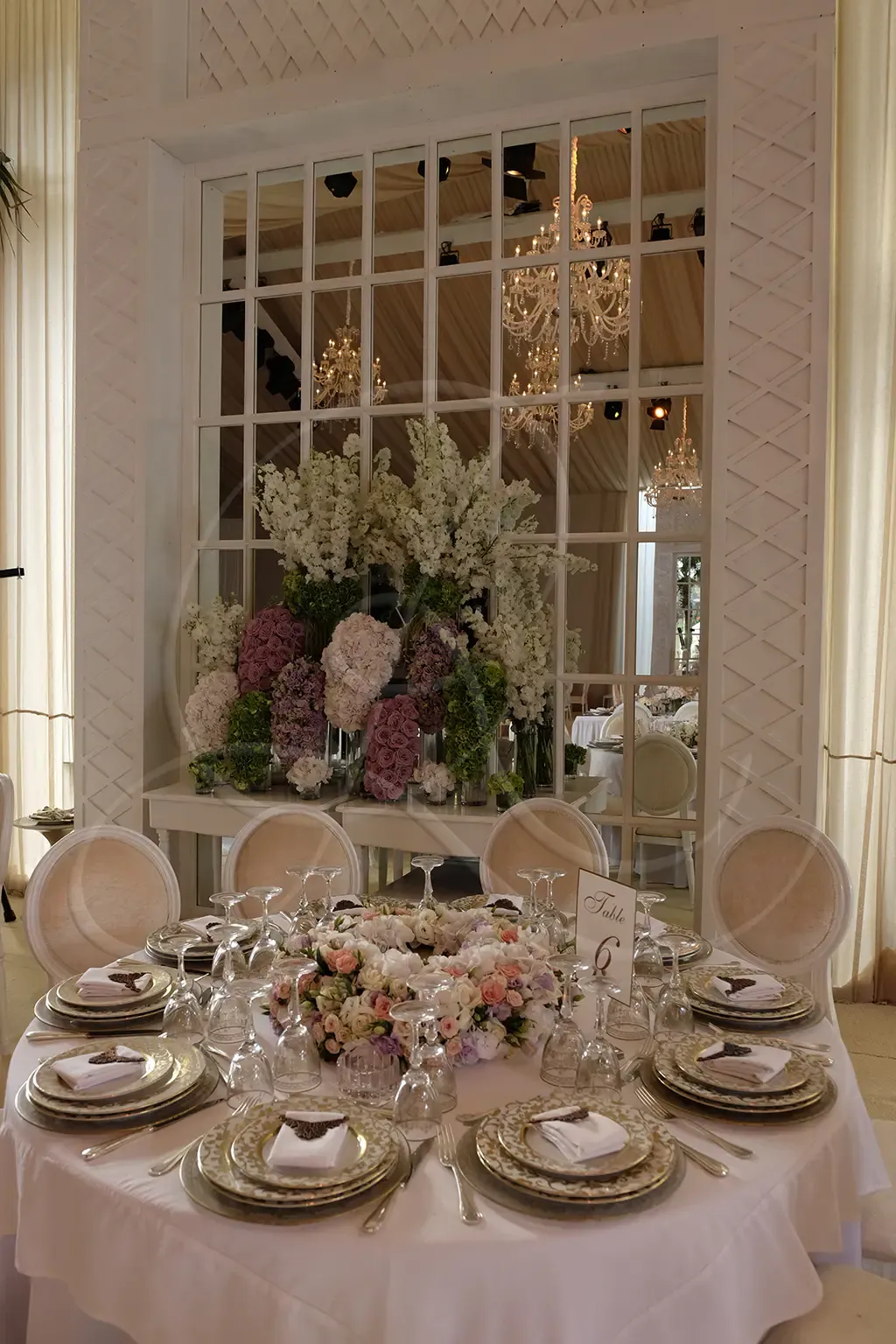
A table setting is not assessed in isolation. It is read in relation to the room, the lighting, the floral or botanical compositions, and the centrepieces. A plain cover on a table dressed in rich materials creates a dissonance. An elaborate cover in a room of clean modern lines may seem out of place. A successful reception dressing is one in which no incongruity is noticed, because none exists.
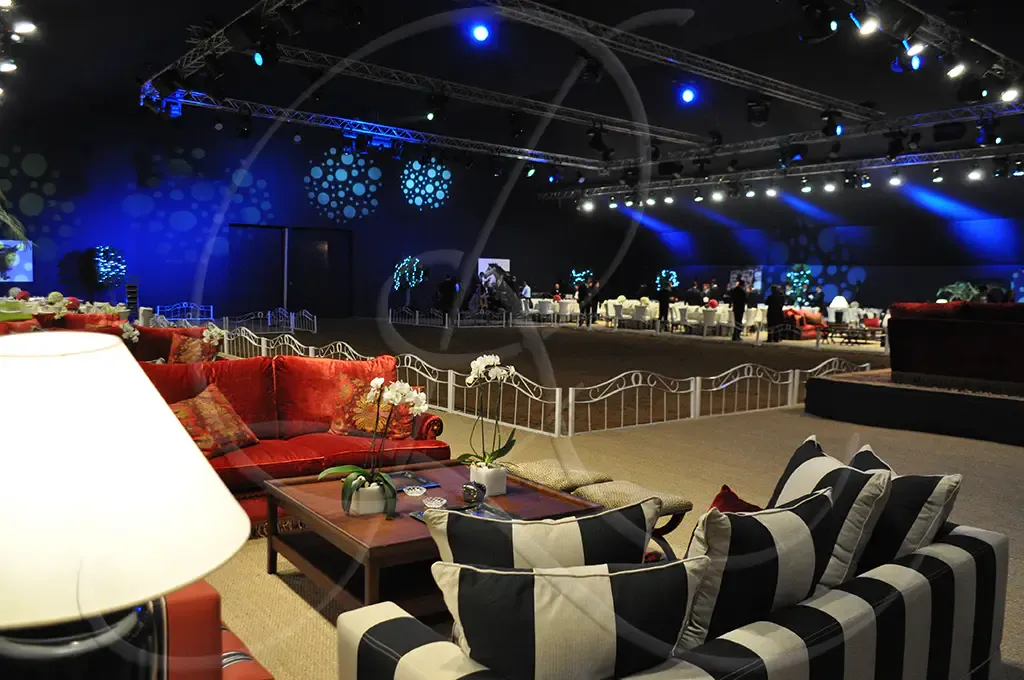
This overall coherence is one of the most demanding criteria to maintain across large receptions, where several tables of different configurations must each respond to a single visual unity, from every angle the eye might rest upon.
What tableware is chosen for a prestige reception?
Tableware as an extension of the gastronomic register
The choice of tableware determines how the dishes will be perceived. A plate with a generous flat and thick rim suits a generous, grounded cuisine. A plate with a thin rim and a restricted dressing zone invites a structured, precise presentation in which every element is positioned with intent. A deep-sided coupe changes the way a liquid or semi-liquid preparation is received by the eye.
This dialogue between vessel and content is considered at the conception of every menu. The kitchen and the head of service define together the appropriate tableware for each course, in keeping with the visual identity agreed for the occasion.
Logistical management of tableware at scale
At a reception of several hundred guests, the logistics of tableware is a subject in itself. Transport without breakage, preheating of plates before service, the return flow to the kitchen for centrepiece service pieces, managing replacement requirements during service: these operational constraints are as important as the initial aesthetic choice. A house that maintains its own inventory of tableware, managed and tracked with rigour, commands this chain far more reliably than one that hires from multiple suppliers.
How does the staging of the table integrate with the identity of an occasion?
Floral and botanical compositions
The arrangements placed on the tables contribute to the atmosphere of the room as fully as the lighting or the background music. Their height, density and colour palette are in dialogue with the tablecloth, the tableware and the register of the event. A composition too tall interrupts the conversation between guests seated opposite one another. A composition too low may disappear visually into the landscape of the table. The right calibration comes as much from experience in staging a room as from a sensitivity to flowers.
Tiered cakes and ceremonial pastry creations
The grand ceremonial pastry pieces are elements of staging in their own right before they are dishes to be consumed. Their proportions in the space, their presentation on the dedicated trolley or buffet, the way they are lit and introduced to the guests: all of this is thought through in advance, as part of the same movement as the rest of the table dressing. A tiered cake treated as a last-minute accessory is immediately apparent.
Rahal Maître Traiteur integrates ceremonial pastry into its overall approach to table design, in keeping with the visual choices retained for the event as a whole.
What criteria allow one to assess the quality of a caterer’s table dressing before engaging them?
Visiting an installation in real conditions, before an event begins, is the most reliable indicator. It reveals the consistency of the dressing from one table to the next, how the service teams manage the final quarter-hour before guests arrive, and the condition of the equipment in use. Photographs of past work also provide a useful indication, provided they are representative of the house’s current standard and not isolated exceptional commissions.
Houses that care for their art of the table do so because they see it as a natural expression of their craft, not because it is asked of them.
To explore our services, visit the Our Services page or the Gallery. To discuss a project, contact the House.
Frequently asked questions
Does the art of the table vary according to the type of reception? Yes. A wedding banquet, a corporate dinner and a diplomatic reception do not share the same table-dressing codes, nor the same requirements in terms of tableware and staging. The House adapts its approach to the register of each occasion from the very first stage of conception.
Must a catering house own its own tableware? It is not an obligation, but it is a significant operational advantage. A house that commands its own inventory guarantees aesthetic consistency and material availability, whereas hiring from multiple suppliers introduces variables that are difficult to control.
How are floral compositions integrated into the service? They form part of the overall conception of the table, on the same footing as the tablecloth and tableware. They are defined during the brief with the client, in keeping with the colour palette and visual register of the occasion.
Can ceremonial pastry pieces be personalised? Yes. Ceremonial pastry pieces are conceived in keeping with the vision of the occasion: its colours, its identity, its nature. They are presented, dimensioned and staged according to their place in the programme of the meal.