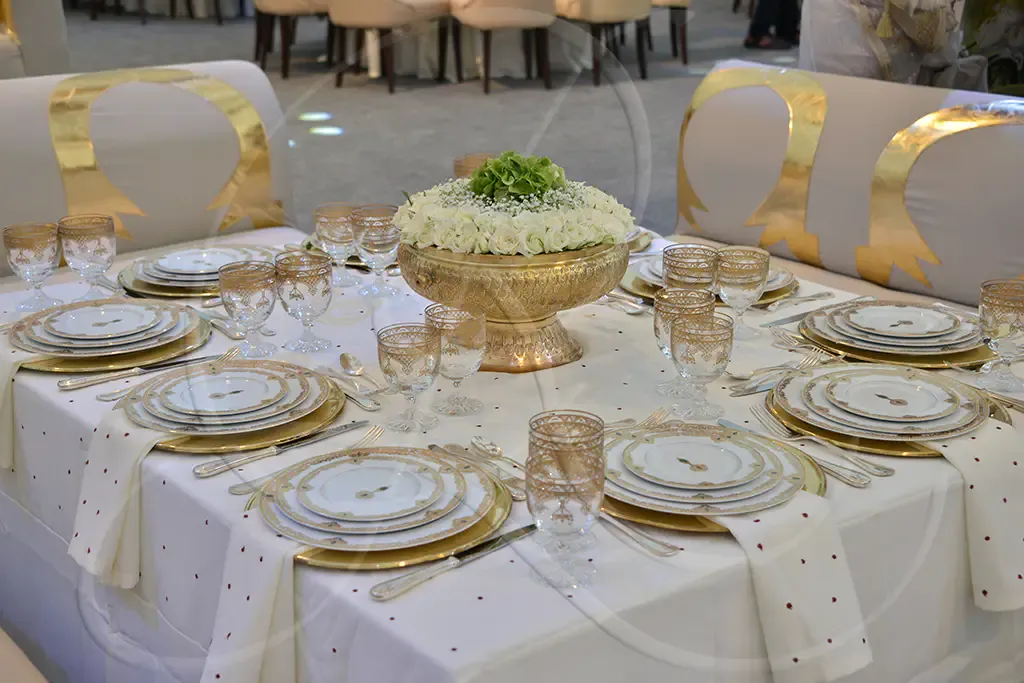
There is a Moroccan way of receiving guests that resembles no other. It begins before the meal itself, in the attention given to the tablecloth, to the choice of tableware, to the arrangement of each dish. It extends well beyond the last pastry, in the mint tea poured from a height, in the conversation that lingers because no one is in a hurry to leave.
Rahal Maître Traiteur has made this art its vocation since 1946.
The table as the first gesture
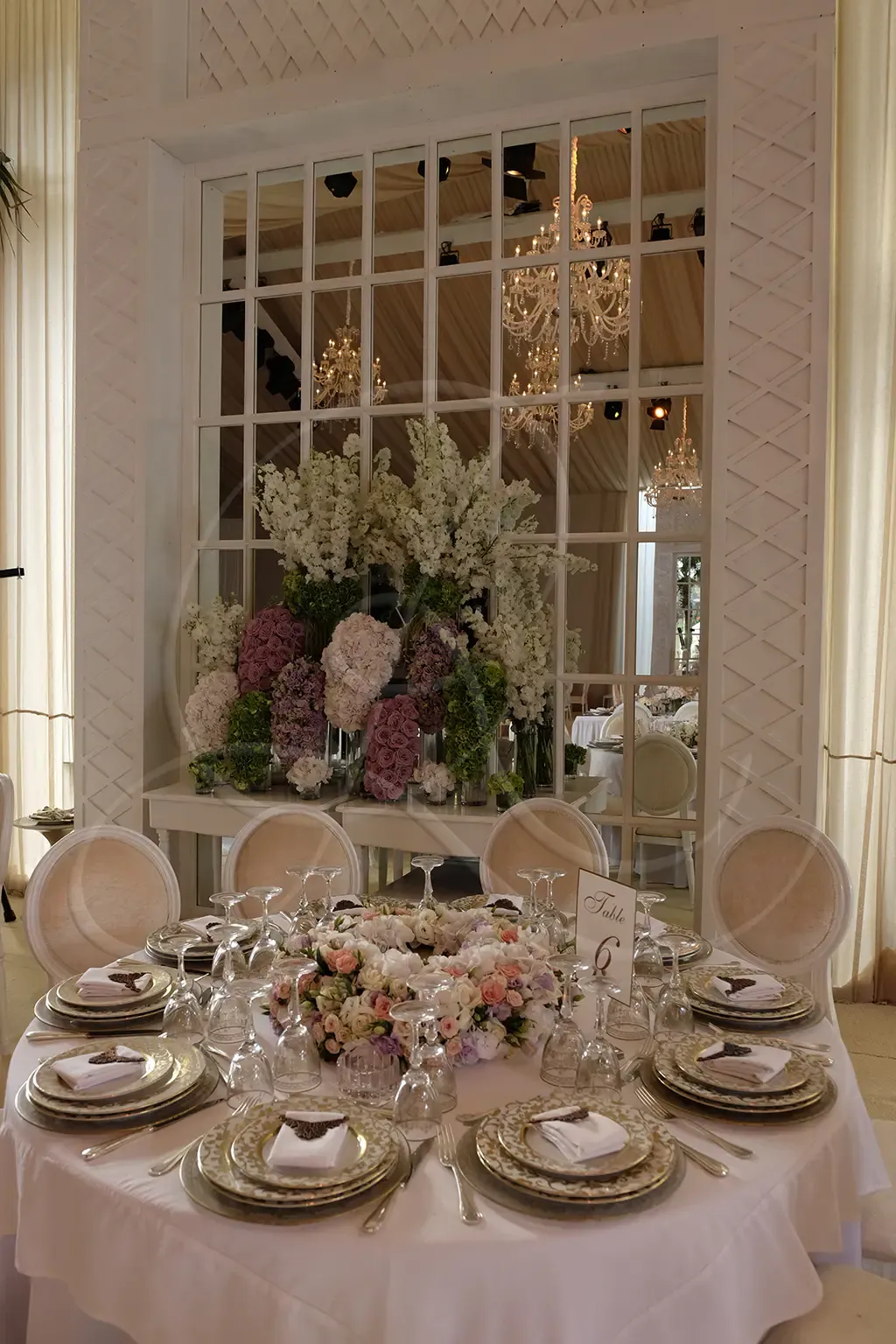
The damask tablecloth laid without a single crease. The Safi earthenware whose colour harmonises with the tones of the menu. The hammered copper dishes placed at the centre with precision, not merely set down. The silverware polished and aligned. Each of these gestures is a signal sent to the guest before they have even taken their seat: we were expecting you. You matter here.
Rahal Maître Traiteur treats the mise en place as a score. Every element holds its place in the visual composition of the table. The height of the centrepieces. The spacing between covers. The way light passes through the glassware. This preparatory work, which remains invisible to the guest, is precisely what allows them to feel at ease from the very first moment.
For the House, laying the table is not a formality. It is the first message the host sends to their guests, the one that says: you matter.
The Moroccan repertoire in all its diversity
Moroccan cuisine is often reduced to a handful of iconic dishes. Rahal Maître Traiteur commands the full repertoire: traditional soups, salads dressed with argan oil, grand cuts of meat slow-cooked to tenderness.
But Moroccan cuisine is also a territory of regional diversity that few caterers truly explore. Rahal Maître Traiteur does not homogenise. The House knows that the great sharing dishes of the North have different balances from those of the South. That the layered pastry preparations of the repertoire vary in their almond proportions depending on their origin. That the cooked salads of the Rif carry a particular acidity. That the slow-cooked preparations of the highlands obey a different rhythm from those of the plains. This geography of flavour, the House draws upon according to the season, the provenance of the guests and the nature of the occasion, so that the table tells something true.
Pastry as a graceful close
The Moroccan table ends in sweetness, and that sweetness is a science. Rahal Maître Traiteur and its pastry branch, La Comtesse, perpetuate recipes handed down from one generation to the next: almond and orange blossom pastry, traditional dry biscuits with almonds and sesame, melt-in-the-mouth shortbreads, the honeyed creations of Morocco’s sweet heritage.
And then there is the tea. Moroccan mint tea is not simply a drink. It is a closing ritual, a signal that the meal may pleasantly extend a little further. The gesture of pouring it from a height, to aerate and to raise a fine foam, is a gesture of patience. Moroccan tea is not to be hurried. It is to be invited. Rahal Maître Traiteur trains its teams in this gesture as in all others, because the detail of the tea speaks as eloquently as the starter about the regard one has for one’s guests.
What the House preserves
Receiving with nobility does not mean receiving with coldness. The warmth of Moroccan hospitality is not at odds with exactingness. This is precisely what Rahal Maître Traiteur has strived to embody since its founding by Rahal Essoulami in 1946: that generosity and rigour are not opposites, they are complements.
Transmission is the right word. Rahal Maître Traiteur trains its young teams in the gestures of an older tradition, not out of nostalgia, but because those gestures are the carriers of quality. One cannot shorten the time required to work an almond paste properly. One cannot replace with a formula the judgement of a pastry maker who knows, from the colour alone, when a syrup is ready. These forms of knowledge are passed on by doing, side by side, season after season.
To refuse standardisation is to accept that every occasion demands preparation time, ingredients chosen with care, and teams who understand why they do what they do. This is what Rahal Maître Traiteur endeavours to preserve, from Haj Rahal Essoulami to tables across the world.